

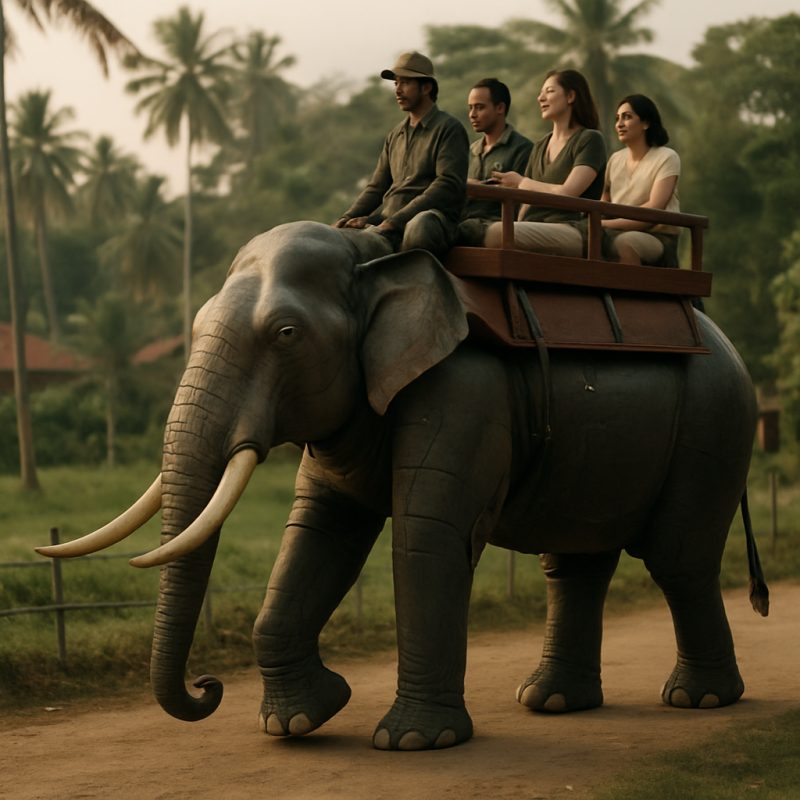
Kerala Tourism is set to receive a prestigious award from PETA India for its groundbreaking mechanical elephant safari initiative, which aims to offer a sustainable alternative to traditional elephant rides. The award will be presented during the upcoming World Animal Day celebrations on October 4, 2026, in recognition of the initiative’s commitment to animal welfare and environmental sustainability.
Transforming the Tourism Experience
The mechanical elephant safari initiative, which debuted in 2025, has quickly garnered attention for its innovative approach to wildlife tourism. Instead of relying on live elephants, which often face harsh training conditions and physical strain, this initiative utilizes lifelike mechanical elephants powered by advanced robotics. These mechanical elephants provide an engaging and immersive experience for tourists, allowing them to explore Kerala’s lush landscapes without compromising the welfare of real elephants. Originally reported by ThePrint.
According to Kerala Tourism officials, this initiative not only enhances the visitor experience but also significantly reduces the ethical concerns associated with traditional elephant rides. The mechanical elephants are designed to mimic the movements and behaviors of live elephants, providing a similar thrill without the ethical implications. The project has received positive feedback from both tourists and animal rights advocates, showcasing a shift towards more responsible tourism practices.
PETA India’s Recognition and Impact
PETA India will honor Kerala Tourism with the award for its commitment to animal welfare during a ceremony scheduled for October 4, 2026. This recognition is significant, as it highlights the growing trend among travel destinations to prioritize ethical treatment of animals. PETA India spokesperson, Dr. Manilal Valliyate, stated, “Kerala’s initiative is a significant step forward in ensuring that tourism doesn’t come at the cost of animal suffering. We hope other destinations will follow Kerala’s lead by adopting similar practices that respect animal welfare.”
The recognition from PETA India will likely bolster Kerala’s reputation as a progressive tourism destination, attracting more eco-conscious travelers who prioritize animal welfare in their travel choices. By adopting innovative solutions, Kerala is setting a benchmark for others in the tourism industry, promoting a model that can be replicated globally.
Visitor Engagement and Economic Benefits
The mechanical elephant safari has already shown promising results in terms of visitor engagement. Pricing for the experience is set at ₹1,500 per person, a competitive rate that appeals to both domestic and international tourists. Since its launch, the initiative has recorded a steady increase in participation, with over 20,000 tourists opting for the mechanical safari during its first year.
By offering a unique and ethical alternative to traditional wildlife experiences, Kerala Tourism is not only enhancing its appeal but also contributing to the local economy. The initiative has created job opportunities for engineers and technicians who work on maintaining and improving the mechanical elephants, thereby supporting local livelihoods. In turn, this helps sustain Kerala’s economy while promoting a more humane approach to tourism.
Future Prospects and Sustainable Tourism
Looking ahead, Kerala Tourism aims to expand the mechanical elephant safari initiative further. Plans include the introduction of additional mechanical wildlife experiences, such as mechanical tigers and rhinos, which could diversify the offerings and attract a broader audience. This expansion aligns with Kerala’s commitment to sustainable tourism, emphasizing the importance of protecting wildlife and their habitats.
As the world becomes increasingly aware of the ethical implications of wildlife tourism, initiatives like the mechanical elephant safari will likely play a pivotal role in shaping the future of travel. Kerala’s innovative approach not only respects animal welfare but also enhances the overall visitor experience, creating a win-win situation for all stakeholders involved. With the forthcoming PETA India award, Kerala is poised to continue leading the charge in responsible tourism practices.
So, Kerala’s mechanical elephant safari initiative represents a significant shift in the tourism industry towards more ethical practices. As travelers become more conscious of their impact on the environment and animal welfare, such innovations will undoubtedly resonate with a growing segment of the market. Kerala stands as a model for other regions to emulate as they seek to balance tourism growth with responsibility.
Originally reported by ThePrint. View original.
